
China's manufacturing supports African infrastructure: High-quality galvanized iron wire departs for West Africa to meet local demanding needs
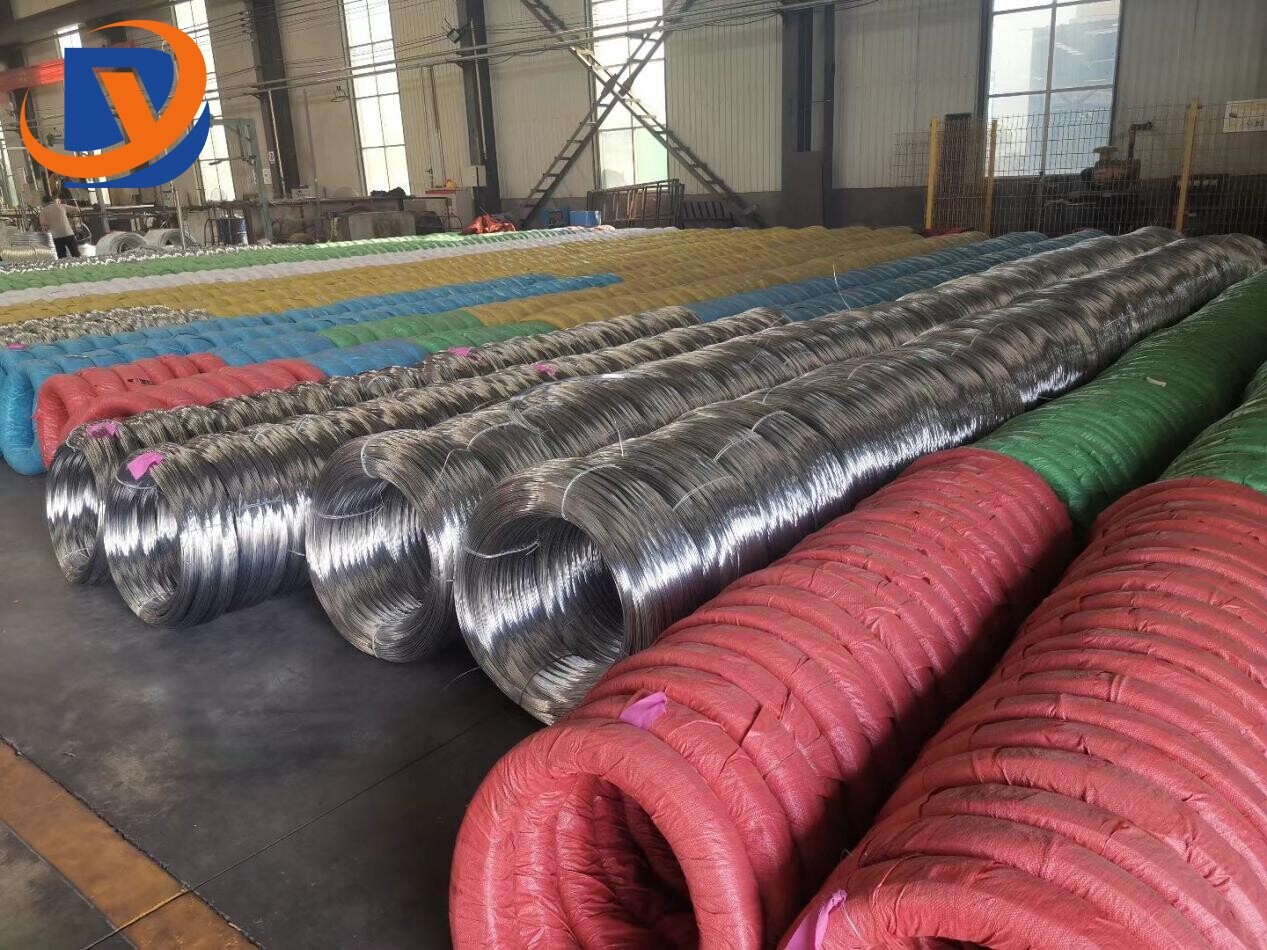
Thousands of tons of high-quality low-carbon steel wires with a uniform zinc coating on their surfaces are being loaded onto ships at Chinese ports and heading towards Africa. These materials will be used to support the massive infrastructure construction currently underway on the African continent.
The Finance Minister of South Africa announced that the country's public infrastructure spending will exceed 1 trillion South African rand over the next three years. This huge market has an urgent demand for high-quality and corrosion-resistant building materials.
Simon Norton, the director of the International Zinc Association for Africa, pointed out: "Infrastructure construction and reinforced concrete rely heavily on steel due to its strength and versatility."

01 Market Demand
Galvanized iron wire is becoming a key material for infrastructure construction in Africa. The South African government has announced that it will invest over 1 trillion rand in public infrastructure construction over the next three years.
This plan will focus its investment on three major areas: transportation and logistics, energy infrastructure, and water and sanitation facilities.
The demand for galvanized iron wire in the African market mainly lies in areas such as building reinforcement, agricultural fences, and the processing of daily goods. These products need to have excellent corrosion resistance to adapt to the high salt content environment in the coastal areas of the region.
Meanwhile, the African galvanized iron wire market shows a strong focus on cost-effectiveness, with relatively simplified packaging and certification requirements. African customers tend to prefer products with larger diameters and larger rolls, usually weighing between 50 and 100 kilograms.
02 Product Advantages
To ensure the stable quality of the supplies to the African region, the galvanized iron wire in this shipment was produced using strict manufacturing processes, guaranteeing that the products will maintain good performance in the high-temperature and high-humidity environment of Africa.
The product is made of high-quality low-carbon steel as the base material, and is processed through multiple procedures such as drawing and forming, acid washing and rust removal, high-temperature annealing, hot galvanizing and cooling.
What is particularly worth noting is that the zinc layer thickness of the product can reach 300 grams per square meter, which is much higher than the 20-60 grams per square meter standard commonly seen in the African market.
This thick zinc coating design can provide long-term anti-corrosion protection for structures such as steel bars, guardrails, pipes and transmission towers. Even in harsh coastal environments, the hot-dip galvanized layer can maintain effective protection for several decades.
To meet the requirements of various application scenarios, the product offers multiple specifications, includingSWG, BWG and metric specifications. Each specification has undergone strict quality control to ensure that it meets the specified mechanical performance and anti-corrosion standards.

03 Hot Dipping Galvanizing Process
The hot-dip galvanizing process involves immersing the product in molten zinc liquid for electroplating. It is a fast production method, and the thickness of the coating is usually 45-300 micrometers. The zinc layer formed by this process is thicker, providing better protective performance, and is highly suitable for the harsh working conditions in the coastal areas of Africa.
In contrast, cold galvanizing is achieved by the unidirectional flow of current in the electroplating tank, causing zinc to gradually coat the metal surface. The production speed is slow and the coating thickness is usually only 3-15 micrometers.
Although cold galvanized products have a brighter appearance, they have poorer corrosion resistance. In the high-humidity environment of Africa, they may only last for a few months.
The production process of galvanized iron wire involves several steps: incoming inspection, pre-washing, degreasing, cleaning, pickling, descaling, soaking in solvent, drying, hot-dip galvanizing, removing residual zinc, cooling, passivation, cleaning, self-inspection and repair, and final product inspection. Each step has strict technical requirements to ensure that the final product quality meets the standards.

04 Optimization Strategies for the African Market
Taking into account the characteristics of the African market, this shipment adopted customized packaging and transportation solutions. Unlike the standard palletized packaging commonly used in the European and American markets, the African market prefers simple bundling methods, such as using plastic woven bags or hemp ropes for packaging.
This packaging method not only reduces costs but also makes it convenient for local workers to handle and use.
In terms of pricing strategy, considering the high sensitivity of the African market to prices, the supplier offered more competitive prices compared to those in the European and American markets. This was mainly achieved through optimizing production processes, adopting practical packaging, and implementing large-scale transportation.
In terms of certification, the requirements for product certification in the African market are relatively low. In some countries, only an SGS test report is needed. This significantly simplifies the export procedures and shortens the delivery cycle.
The payment methods in the African market are also relatively flexible. However, it should be noted that some countries may require cash on delivery, which may increase the financial pressure on exporters. Therefore, it is recommended to conduct sales through reliable local agents to reduce customs clearance risks and the risk of capital recovery.
05 Prospects of the Infrastructure Market in Africa
The demand for galvanized iron wire in the African infrastructure market is growing rapidly. Besides South Africa's trillion rand infrastructure plan, the West and East African regions also show great potential.
Take Gabon as an example. The export volume of hot-dip galvanized wire from this country increased from 1,000-2,000 tons in 2019 to 1,800-2,800 tons in 2023. It is mainly used to meet the infrastructure construction needs of neighboring countries such as Congo and Cameroon.
Botswana is also actively developing its local hot-dip galvanizing industry. The country recently introduced its first fully automated hot-dip galvanizing production line, with an annual design capacity of 100,000 tons. This indicates that African countries are striving to enhance their local manufacturing capabilities and reduce their reliance on imported products.
Galvanized iron wire is widely used in infrastructure projects in Africa, including bridge girders, guardrails, reinforcing bars in reinforced concrete, and other structural components.
Continuous galvanized steel plates are used for roofs and cladding, while hot-dip galvanized steel is employed for the structural framework. The zinc coating protects pipes and tanks from corrosion, ensuring the safe transportation and storage of water and wastewater.
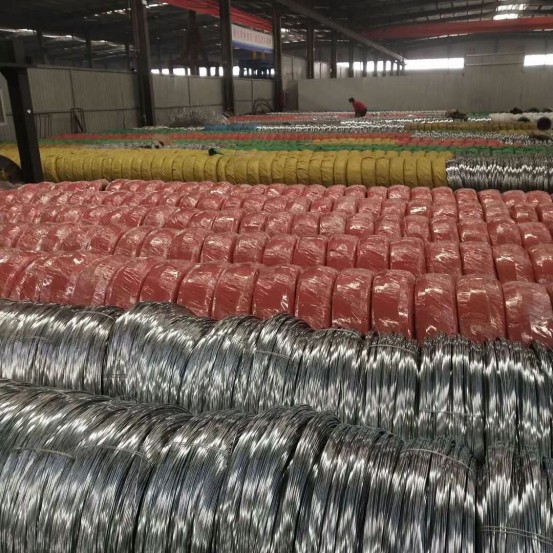
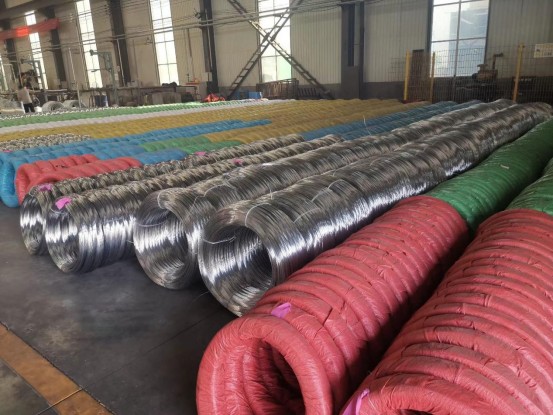
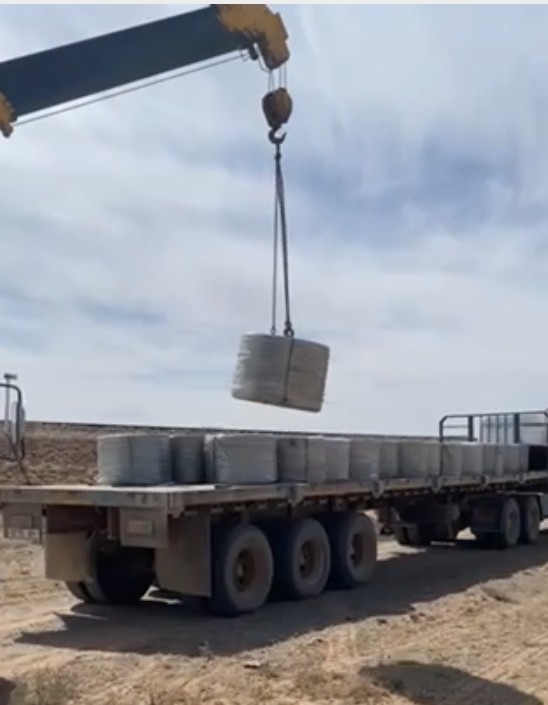
The cargo ship slowly left the port. These thousands of tons of galvanized iron wire will arrive at a West African port in a month. They will be transported to multiple construction sites and used as crucial materials for binding steel bars, fixing formwork, and connecting scaffolding.
Botswana is building the country's first fully automated hot-dip galvanizing production line, with an annual capacity of 100,000 tons.
In the harsh environment from the west to the east coast of South Africa, galvanized steel forms the main structure of transmission towers and railway cable towers. These steel structures, protected by zinc coatings, are supporting the infrastructure framework of a continent.
Related Posts
- ▶ Is Stainless Steel 100% Rust Proof? Causes
- ▶ The necessary conditions and classification of 310S stainless steel pipes
- ▶ Yongding Metals Successfully Expands into the Caribbean Market, Jamaican Client Orders 6 Tons of High-Quality Aluminum Tubes and Gives High Praise
- ▶ Successful Shipment of 10 Tons Stainless Steel Sheets to Iraq with Third-Party Inspection Approval
- ▶ Innovative aluminum structures set sail for the Philippines to support efficient irrigation projects in pineapple fields
- ▶ Shandong Yongding: High-quality steel wires are dispatched to Pakistan, empowering overseas infrastructure projects and jointly creating a new chapter of cooperation.
Send Us A Message
Apply for Best Quotation